

Stop Grinding.
Sleep Better.
Protect Your Smile.
Teeth grinding and clenching during sleep causes damage that builds silently — worn enamel, cracked teeth, jaw pain, and morning headaches you may not connect to what's happening at night. At Westlake Dental Associates, a precision-fit custom night guard protects your teeth and gives your jaw the rest it needs.
Bruxism — the sleep habit that damages teeth without you knowing
Bruxism is the clinical term for unconscious teeth grinding or jaw clenching — most commonly during sleep, when you have no voluntary control over it. It affects an estimated 8% to 10% of adults, and the majority have no idea they're doing it until their dentist spots the signs or a partner mentions the sound.
The forces generated during bruxism are far greater than those produced by normal chewing. Molar-to-molar grinding pressure can exceed 250 pounds per square inch — applied repetitively for hours throughout the night. Over months and years, this force flattens and fractures enamel, cracks existing restorations, inflames the temporomandibular joint, and fatigues the jaw muscles that connect through the temples and down the neck.
A custom night guard doesn't stop the grinding reflex — it absorbs and redistributes the force so your teeth, restorations, and jaw joint are protected while your body works through it. At Westlake Dental Associates, we fabricate precision-fit night guards from detailed impressions of your bite — not generic sizing.

Six signs you may be grinding your teeth at night
Because bruxism happens during sleep, most patients discover it through secondary symptoms rather than catching themselves in the act. If you're experiencing several of these, a night guard evaluation is warranted.
Jaw Pain or Stiffness on Waking
A sore, tight, or fatigued jaw when you first wake up is one of the most reliable indicators of nighttime grinding. The jaw muscles have been working for hours — often harder than they work during any meal — and wake up exhausted.
Recurring Morning Headaches
Tension headaches concentrated near the temples that are present on waking and ease during the day. These are caused by the temporalis muscle — which runs along the side of the skull — contracting repeatedly through the night during grinding episodes.
Flattened or Worn Tooth Surfaces
Teeth that appear shorter, flatter, or more uniform than they used to be — particularly the front teeth and molars. The natural variation in tooth height is ground away over time, and the biting edges develop a smooth, polished look that no cleaning produces.
Cracked, Chipped, or Sensitive Teeth
Unexplained cracks in otherwise healthy teeth, chipped edges on front teeth, or sudden sensitivity to hot and cold that appears without a cavity. Grinding creates lateral forces that enamel isn't designed to withstand — microfractures develop and propagate over time.
Cheek or Tongue Indentations
Visible scalloping or ridging along the inner cheeks or the lateral edges of the tongue — caused by teeth pressing repeatedly into the soft tissue during clenching episodes. Often noticed incidentally in a mirror or pointed out during a dental exam.
Audible Grinding Sounds
A bed partner hearing a rhythmic scraping or grinding sound during the night is one of the most definitive signs of bruxism. The sound is produced by enamel-on-enamel contact and can be loud enough to wake a partner even from deep sleep.

What happens to your teeth — and your jaw — without protection
Untreated bruxism doesn't plateau. The damage compounds year over year as enamel thins, cracks propagate, and the TMJ absorbs increasingly uneven force. Here's what that progression looks like across four areas.
- Enamel Irreversible Enamel Loss Enamel does not regenerate. Once ground away, the only restorative options are bonding, veneers, or crowns — all of which become necessary years earlier than they would in a non-grinder.
- Restorations Accelerated Crown & Filling Failure Grinding forces crack porcelain crowns, fracture composite fillings, and loosen veneers at a rate far beyond normal wear. Restorations that should last 10–15 years may fail in 3–5 without night guard protection.
- TMJ TMJ Inflammation & Disc Damage The TMJ disc absorbs grinding forces that the muscles don't dissipate. Over time, the disc shifts out of position — producing clicking, limited opening, and chronic jaw pain that requires separate treatment.
- Bone Bone Loss Around Tooth Roots Chronic lateral forces stress the periodontal ligament and the supporting jawbone. Combined with any existing gum disease, bruxism accelerates bone loss around tooth roots — increasing long-term tooth loss risk.
Why the difference in fit matters more than you think

Click image to enlarge
Getting your custom night guard — start to finish
The entire process from evaluation to wearing your finished guard takes two short appointments. Here's exactly what to expect at each stage.
Bruxism Evaluation
We examine your teeth for wear patterns, check your bite, and assess the TMJ for signs of strain. This tells us the severity and guides the type of appliance that's right for you.
Impressions & Bite Records
We take detailed impressions of your upper and lower teeth and record your bite relationship. These are sent to the dental lab that fabricates your guard to exact specifications.
Delivery & Fitting
When your guard returns from the lab — typically in one to two weeks — we seat it, check the fit against your bite, and make any necessary adjustments so it's comfortable from night one.
Wear & Monitor
You wear the guard every night. We check it at your regular exams for wear, fit changes, and evidence of how effectively it's protecting your teeth — adjusting as needed over time.
Why a custom night guard outperforms every boil-and-bite option
Pharmacy night guards cost less upfront — but the tradeoffs in protection, comfort, and durability mean most patients abandon them within weeks and are left unprotected. Here's how they compare side by side.
Conditions connected to teeth grinding
Bruxism rarely occurs in isolation — it's tightly linked to TMJ disorder and accelerates damage to existing dental work.
Night Guard FAQs
The most common signs are jaw soreness or stiffness on waking, recurring morning headaches near the temples, a bed partner reporting grinding sounds, or your dentist noting flat or worn tooth surfaces at an exam. You may also notice increased tooth sensitivity, small chips on the edges of front teeth, or scalloping on the inside of your cheeks. If you're experiencing any combination of these, a bruxism evaluation is the right first step — we'll confirm the diagnosis and determine whether a night guard is the appropriate treatment.
A night guard is an occlusal appliance worn during sleep to protect teeth from bruxism. It's made from hard or dual-laminate materials designed to withstand the repetitive, sustained forces of grinding. A sports mouth guard is a different appliance entirely — softer, bulkier, and designed to absorb impact forces from contact during athletic activity. They're not interchangeable. Wearing a sports guard to sleep does not protect against grinding effectively and may worsen jaw symptoms.
With proper cleaning and storage, a well-made custom night guard typically lasts three to five years. Heavy grinders may wear through one faster; lighter grinders may get longer use. We check the guard at each regular exam for signs of wear, distortion, or changes in fit. A guard that's showing deep grooves or is no longer seating correctly should be replaced — a worn guard that's no longer absorbing force evenly is providing less protection than you think.
A poorly designed or ill-fitting night guard can theoretically worsen TMJ symptoms by holding the jaw in a position that increases joint stress. This is why we don't recommend store-bought boil-and-bite guards for patients with known TMJ involvement — the generic positioning doesn't account for your specific joint anatomy. Our custom appliances are calibrated to your bite relationship, and we follow up to ensure the guard is relieving rather than adding to your symptoms. If you have both bruxism and TMJ, we discuss both conditions together at your evaluation.
Rinse the guard with cool water immediately after removing it each morning — never hot water, which can warp the material. Brush it gently with a soft toothbrush and mild dish soap; avoid toothpaste, which is abrasive enough to scratch the surface over time. Let it air dry completely before storing it in the ventilated case we provide. Store away from heat and direct sunlight. Bring it to your dental appointments so we can check for wear and fit. Never wrap it in a napkin — it will be thrown away.
Coverage varies significantly by plan. Some dental insurance plans cover night guards partially as a restorative or therapeutic appliance — typically between 50% and 80% after deductible. Others classify it as an elective or TMJ-related device covered under medical insurance. We recommend verifying your benefits before your appointment. Our team will provide a detailed predetermination if needed so you know your out-of-pocket cost before committing to treatment. See our financial options page for payment plan details.
No — a night guard does not eliminate the grinding reflex. Bruxism is a neuromuscular behavior with roots in sleep physiology, stress, and bite mechanics that a physical appliance can't override. What the guard does is intercept the damage: it absorbs and distributes the grinding force so that the hard acrylic wears instead of your enamel. Think of it as a sacrificial barrier that you replace every few years rather than a cure. Addressing contributing factors — stress, caffeine, sleep quality, bite misalignment — alongside the guard produces the best long-term outcomes.
The process takes two appointments. At the first, we take impressions of your teeth and send them to the dental lab — turnaround is typically one to two weeks. At the second appointment, we seat the finished guard, verify the fit against your bite, and make any minor adjustments needed. From first appointment to wearing your guard home is usually about two weeks total. If you're in significant discomfort in the meantime, we can discuss interim options while your custom guard is being fabricated.
Your teeth are grinding down every night without one
A custom night guard is one of the best investments you can make in your long-term oral health. Two appointments. Years of protection for your teeth, crowns, and jaw joint.

Comprehensive Family Care
The tradition of family is central to every visit at Westlake Dental. Our goal is to treat patients with the same care and compassion we would our own families. As general dentists who do not believe in one-size-fits-all care, Drs. Constantinou, Reichard, and McClendon consult with each patient, from children through adults, to provide comprehensive treatment solutions unique to each person.
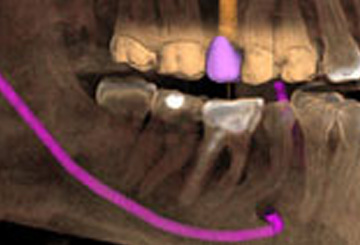
3-D Guided Implants
When it comes to dental implants, accuracy is everything. With the latest 3-D imaging, implants at Westlake Dental are taken to a new level of precision. Dr. Constantinou has traveled the country to study at some of the foremost implant facilities in the world in order to understand the wave of innovation and advancement in the field. Drs. Reichard and McClendon are also trained in the latest technology and methods..

Same-Day Crowns
With Westlake Dental Associates’ state-of-the-art CEREC machine, patients can receive beautiful crowns, often during just one appointment, instead of waiting weeks to get their crowns back from the lab. Teeth are quickly restored without any messy impressions, which means a lower cost and better results than with traditional treatment.
