

Stop the Jaw Pain.
Treat the Source.
TMJ disorder causes more than jaw pain — it triggers headaches, ear aches, neck tension, and a clicking jaw that disrupts daily life. At Westlake Dental Associates, we diagnose TMJ accurately and treat it with custom oral appliances and targeted bite therapy so you can eat, sleep, and talk without pain.
The joint that controls every bite, word, and yawn — and what happens when it breaks down
The temporomandibular joint — your TMJ — is the hinge connecting your jaw to your skull on both sides of your face. It's one of the most complex joints in the body, capable of sliding, rotating, and absorbing the force of thousands of bites per day. When this joint becomes inflamed, misaligned, or overloaded, the result is TMJ disorder (also called TMD).
TMJ disorder is more common than most patients realize — it affects an estimated 10 million Americans and is a leading cause of chronic facial pain, jaw stiffness, and unexplained headaches. The challenge is that TMJ symptoms are often misdiagnosed as tooth pain, earaches, or tension headaches because the joint's nerve pathways overlap with so many other structures in the head and neck.
At Westlake Dental Associates, we evaluate bite alignment, joint function, and muscle tension to identify whether TMJ disorder is the source of your pain — and build a treatment plan that addresses the root cause, not just the symptoms.

TMJ causes more than jaw pain — here's what to watch for
Because the temporomandibular joint is connected to so many surrounding structures, TMJ disorder produces a wide range of symptoms that often seem unrelated. If you're experiencing several of these at once, TMJ disorder may be the common cause.
Jaw Clicking or Popping
A clicking, popping, or grinding sound when you open or close your mouth. This happens when the disc inside the joint slips out of its normal position. It may or may not be painful — but it signals that the joint isn't moving correctly.
Morning Headaches
Headaches concentrated near the temples, forehead, or behind the eyes — especially in the morning. These are caused by the jaw muscles working overtime during sleep, either from clenching, grinding, or poor bite alignment that stresses the joint.
Ear Pain Without Infection
Pain, pressure, or a plugged sensation in the ears with no sign of infection. The TMJ sits directly in front of the ear canal — inflammation in the joint radiates into the ear and is regularly mistaken for an ear infection or sinus pressure.
Limited Jaw Opening
Difficulty fully opening or closing your mouth — a feeling of stiffness, locking, or resistance when you yawn, eat, or speak. In some cases the jaw can lock open or closed entirely, requiring manual manipulation to release.
Neck and Shoulder Tension
Chronic tightness or pain in the neck, upper shoulders, and trapezius muscles that doesn't respond to stretching or massage. The jaw muscles are interconnected with the neck — TMJ muscle tension travels downward through the entire chain.
Generalized Tooth Soreness
Teeth that feel sore all over rather than at one specific location — especially in the morning. This is a hallmark sign of nighttime clenching or grinding (bruxism), which frequently co-occurs with TMJ disorder and accelerates wear on tooth surfaces and restorations.

How a custom oral appliance relieves TMJ disorder
For most patients, the first-line treatment for TMJ disorder is a precision-fabricated oral appliance — also called a splint, night guard, or occlusal device. It's worn during sleep and works by repositioning the jaw into a more neutral, relaxed position that takes pressure off the joint and surrounding muscles.
Unlike over-the-counter boil-and-bite guards, our appliances are custom-molded from impressions of your exact bite — ensuring the joint rests at the optimal angle throughout the night rather than being forced into a position that continues to stress it.
- Fit Precision-Molded to Your Bite Fabricated from detailed impressions, not generic sizing — the appliance positions your jaw at the exact angle that reduces joint stress.
- Function Decompresses the Joint Creates space between the upper and lower jaw, allowing the TMJ disc to return to a more normal position and reducing inflammation over time.
- Protection Guards Against Grinding Absorbs the force of nighttime clenching and bruxism — protecting natural teeth, crowns, veneers, and other restorations from wear and fracture.
- Durability 3–5 Year Lifespan With proper cleaning and storage, a custom appliance lasts years longer than store-bought alternatives, which warp and degrade within months.
TMJ Disorder vs. Regular Toothache

Click image to enlarge
How to tell the difference — and why it matters for treatment
TMJ disorder and tooth pain share overlapping symptoms and are frequently confused — even by patients who've already seen multiple providers. The distinction matters because the treatments are completely different. Here's how to tell them apart.
- Pain spreads across the jaw, temple, ear, and neck
- Jaw clicks, pops, or locks during movement
- Worst in the morning after sleep
- Teeth feel sore all over — not one specific tooth
- Not relieved by standard OTC pain medication
- Worsens with stress, clenching, or chewing hard food
- Pain localized to one specific tooth or socket
- Sharp sensitivity to hot, cold, or sweet foods
- Visible cavity, crack, or damaged restoration
- Pain when biting down on that specific tooth
- Often relieved temporarily by ibuprofen or acetaminophen
- No jaw clicking, locking, or limited opening
Conditions connected to TMJ disorder
TMJ disorder rarely occurs in isolation — it typically overlaps with other bite and jaw conditions that benefit from coordinated treatment.
TMJ Treatment FAQs
TMJ disorder typically produces a combination of jaw pain or stiffness, clicking or popping when opening the mouth, headaches concentrated near the temples, ear pain or pressure without infection, and neck or shoulder tension. Many patients describe a generalized soreness of the teeth — different from a toothache — along with difficulty chewing hard foods or opening their mouth fully. Symptoms are often worse in the morning after a night of unconscious clenching or grinding.
Diagnosis begins with a clinical examination of jaw movement, bite alignment, and muscle tenderness. We palpate the joint and surrounding muscles, listen for clicking or crepitus, and measure how far you can open your mouth. X-rays or CBCT imaging may be taken to assess the joint space and bone structure. We also review your symptoms in detail — because TMJ often presents differently in each patient, the clinical history is just as important as the physical exam.
Mild cases — particularly those triggered by a temporary stressor like a difficult dental procedure or a period of heavy stress-related clenching — sometimes improve on their own with rest, soft foods, and anti-inflammatories. However, structural TMJ disorder, disc displacement, or chronic bruxism-driven TMJ damage does not self-resolve. Left untreated, it typically worsens over time, leading to progressive joint damage, increasing pain, and greater difficulty treating it. Early intervention produces the best outcomes.
A standard night guard is designed primarily to protect teeth from grinding forces — it creates a barrier between upper and lower teeth but doesn't actively reposition the jaw. A TMJ splint (also called an occlusal splint or stabilization appliance) is specifically designed to hold the jaw in a therapeutically optimal position that decompresses the joint and reduces muscle strain. Both are custom-fabricated, but a TMJ splint is calibrated for joint positioning, not just tooth protection. We determine which type is appropriate based on your diagnosis.
Most patients notice significant improvement within four to six weeks of consistent oral appliance use. Full resolution of symptoms — particularly if there is underlying muscle tension or disc displacement — can take three to six months. We schedule follow-up appointments to adjust the appliance and track your progress. Some patients use their appliance long-term to prevent recurrence, particularly if bruxism is a contributing factor.
Coverage for TMJ treatment varies significantly. Some dental plans cover oral appliances and diagnostic imaging; others classify TMJ as a medical condition covered under medical insurance rather than dental. We recommend verifying your benefits with both your dental and medical insurers before treatment. Our team will provide a detailed treatment plan with billing codes to help you submit claims to both providers. See our financial options page for payment plan details.
Yes — bruxism (teeth grinding and clenching) and TMJ disorder are closely linked and frequently co-occur. Bruxism overloads the temporomandibular joint with repeated, excessive force — particularly during sleep when the brain's normal inhibitory signals are reduced. Over time, this sustained overload causes joint inflammation, disc displacement, and muscle fatigue that presents as classic TMJ symptoms. Treating the bruxism often substantially reduces TMJ symptoms, which is why our first-line treatment addresses both simultaneously with a custom appliance.
Any jaw pain that has persisted for more than a week, is limiting your ability to eat or open your mouth fully, or is accompanied by clicking, locking, or recurring headaches warrants a professional evaluation. Don't wait for symptoms to become severe — TMJ disorder responds best to early, conservative treatment. If your jaw has locked or you're in acute pain, call us for a same-day appointment at (440) 835-8999.
Jaw pain has a source — and a solution
If you're dealing with clicking, headaches, or jaw stiffness that won't quit, our Westlake team can evaluate your TMJ and get you into a custom appliance fast. Most patients feel meaningful relief within weeks.

Comprehensive Family Care
The tradition of family is central to every visit at Westlake Dental. Our goal is to treat patients with the same care and compassion we would our own families. As general dentists who do not believe in one-size-fits-all care, Drs. Constantinou, Reichard, and McClendon consult with each patient, from children through adults, to provide comprehensive treatment solutions unique to each person.
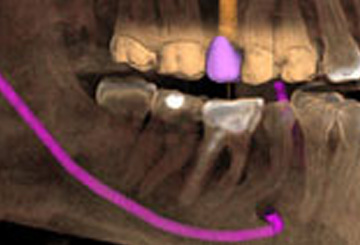
3-D Guided Implants
When it comes to dental implants, accuracy is everything. With the latest 3-D imaging, implants at Westlake Dental are taken to a new level of precision. Dr. Constantinou has traveled the country to study at some of the foremost implant facilities in the world in order to understand the wave of innovation and advancement in the field. Drs. Reichard and McClendon are also trained in the latest technology and methods..
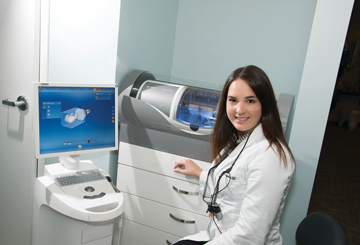
Same-Day Crowns
With Westlake Dental Associates’ state-of-the-art CEREC machine, patients can receive beautiful crowns, often during just one appointment, instead of waiting weeks to get their crowns back from the lab. Teeth are quickly restored without any messy impressions, which means a lower cost and better results than with traditional treatment.
