

Invisalign — Clear Aligners for a Straighter Smile, Discreetly
Invisalign is an orthodontic treatment that uses a series of custom-made, removable, and nearly invisible plastic aligners to straighten teeth — without traditional metal brackets or wires. The aligners are worn 20 to 22 hours a day and replaced every one to two weeks, gradually moving your teeth into their proper positions.
Whether you're an adult who's always wanted a straighter smile, a teen looking for a discreet alternative to braces, or someone who never quite finished orthodontic treatment the first time, this page walks through how Invisalign works, what it treats, and how to know if it's right for you.

Why patients choose Invisalign over traditional braces
Invisalign isn't just about looks — it's a fundamentally different orthodontic experience. The removable, low-profile aligners make it easier to live your normal life while your smile transforms in the background.
- Virtually Invisible Made from clear SmartTrack material, the aligners are nearly impossible to see — so you can smile, present, and pose for photos without feeling self-conscious.
- Removable Take them out to eat, drink, brush, and floss. No food restrictions, and oral hygiene stays as easy as it always was.
- More Comfortable No metal brackets, no wires, no emergency visits for broken hardware. Just smooth, flexible plastic shaped to your teeth.
- Faster Results Many patients see results in 6 to 18 months — often faster than traditional braces for similar cases.
The bite and alignment issues Invisalign can correct
Invisalign works for a wide range of cases — from cosmetic touch-ups to more complex bite corrections. Here's what the system can handle for adults and teens.
Crowded Teeth
VERY TREATABLEWhen teeth don't have enough room and overlap, twist, or push out of line. Invisalign gradually creates space and brings them into alignment.
Gaps Between Teeth
VERY TREATABLEDiastema (spacing) between teeth can be closed with Invisalign — often in less time than orthodontic alternatives, depending on the size of the gaps.
Overbite, Underbite & Crossbite
MILD TO MODERATEWhen your upper and lower teeth don't meet correctly, Invisalign can correct mild to moderate bite issues — improving chewing, speech, and long-term tooth wear.
General Misalignment
VERY TREATABLEMild to moderate misalignments — crooked, rotated, or tilted teeth — respond beautifully to Invisalign's targeted, gradual repositioning.

See your new smile — before treatment even starts
Modern Invisalign treatment uses 3D digital scanning to map your teeth and simulate exactly how they'll move from week to week. You'll see a preview of your final smile before you wear your first aligner — so you know what to expect every step of the way.
How Invisalign treatment actually works
From your first consultation to your final aligner, here's what to expect during the Invisalign journey. Most patients complete treatment in 12 to 18 months, with brief check-ins along the way.
- Consultation and 3D imaging We evaluate your bite and smile, take digital scans and photos, and confirm Invisalign is the right fit. You'll see a preview of your projected final smile before treatment begins.
- Custom aligner fabrication A full series of clear aligners is custom-made to fit your teeth. Each aligner is engineered to move specific teeth in small, planned increments.
- Wear and progress You wear each set of aligners 20 to 22 hours a day, removing them only to eat, drink, brush, and floss. Switch to the next set every one to two weeks as directed.
- Check-ups and final results Brief check-ins every 6 to 8 weeks let us monitor your progress and make any needed adjustments. When you finish treatment, retainers help your new smile hold its position.

Is Invisalign really the right choice for you?
Invisalign is powerful, but it's not always the answer. Depending on your situation, traditional braces — or even a cosmetic solution like veneers — might be a better fit. Here's how the options compare.
When braces still win
Traditional braces remain the better choice for severe bite problems, complex rotations, or cases requiring major tooth movement. They're always working — they can't be removed — and they give the orthodontist more precise control over difficult cases.
Real correction vs. camouflage
If you only want to look like your teeth are straighter, veneers can camouflage minor misalignment quickly. But veneers don't move your teeth — they cover them. Invisalign actually corrects the underlying alignment.
Dental Veneers →When grinding complicates things
If you grind your teeth at night, Invisalign aligners can sometimes help — they cover the chewing surfaces like a thin night guard. But severe bruxism may need dedicated treatment first to protect both your teeth and your final results.
Bruxism Treatment →
Are you a good candidate for Invisalign?
Invisalign is suitable for adults, teens, and even some children with specialized aligners. But success depends heavily on compliance — wearing the aligners as directed. Here's a quick honest breakdown.
Invisalign may be right if
- You have mild to moderate alignment issues
- You have healthy teeth and gums
- You're willing to wear aligners 20–22 hours daily
- You want a discreet treatment option
- You're an adult, teen, or older child
Invisalign may not be right if
- You have severe bite or rotation issues
- You have active gum disease or decay
- You're unlikely to wear them consistently
- Your case requires major tooth movement
- You have certain prior dental work that interferes
Not sure if your bite needs correction in the first place? Our guide on how a misaligned bite affects your health walks through the signs and symptoms worth paying attention to.
Invisalign FAQs
Most patients complete Invisalign treatment within 12 to 18 months. Treatment time depends on the complexity of your case and how consistently you wear your aligners. Simpler cases — like minor crowding or small gaps — can sometimes finish in as little as 6 months. More involved bite corrections may take longer.
The biggest downside is compliance — Invisalign only works if you wear the aligners 20 to 22 hours a day. Forgetting to put them back in after meals, or leaving them out for special occasions, slows down treatment. You also have to remove them every time you eat or drink anything other than water, which takes some adjustment.
Neither is universally better — they're better at different things. Invisalign wins on appearance, comfort, and convenience. Traditional braces win on complex cases requiring major tooth movement or severe bite correction. At your consultation, we'll look at your specific case and recommend the option that's actually right for your situation.
Yes — you wear your aligners while sleeping. The recommended 20 to 22 hours a day includes overnight wear. Most patients find sleeping with Invisalign comfortable after the first night or two of adjustment.
Invisalign isn't right for every case. Some dentists hesitate to recommend it for patients with severe bite issues, complex rotations, or those unlikely to comply with daily wear requirements. A responsible recommendation depends on your specific situation — which is why a thorough consultation matters before starting any orthodontic treatment.
Invisalign is most commonly used for adults and teens, but specialized Invisalign First aligners can treat younger children with growing smiles. There's no upper age limit — many of our patients are well into adulthood when they decide to finally straighten their teeth. What matters more than age is having healthy teeth and gums, and a commitment to consistent wear.
Most patients describe Invisalign as uncomfortable rather than painful — usually for the first day or two with each new aligner. The pressure is a sign the aligners are working. Discomfort typically fades quickly, and many patients report no pain at all after the initial adjustment period.
Rinse aligners in lukewarm water every time you remove them, and gently brush them with a soft toothbrush and clear, mild soap. Avoid hot water (it can warp the plastic) and colored toothpastes (they can stain). Once a week, soak them in an Invisalign cleaning solution or denture cleaner to keep them fresh and clear.
You should aim to keep aligners out of your mouth no more than about 30 minutes during any meal or snack — and a total of no more than 2 to 4 hours per day. Going much beyond that means you're falling short of the 20 to 22 hour daily wear time, which slows progress and can compromise your results.
Many patients notice a slight lisp during the first few days with new aligners. It almost always disappears within a week as your tongue adjusts to the thin plastic. Most people around you won't even notice.
Ready to straighten your smile — discreetly?
Book an Invisalign consultation and we'll evaluate your bite, walk through your options, and let you know if Invisalign is the right path for your goals — or if another treatment might serve you better.

Comprehensive Family Care
The tradition of family is central to every visit at Westlake Dental. Our goal is to treat patients with the same care and compassion we would our own families. As general dentists who do not believe in one-size-fits-all care, Drs. Constantinou, Reichard, and McClendon consult with each patient, from children through adults, to provide comprehensive treatment solutions unique to each person.
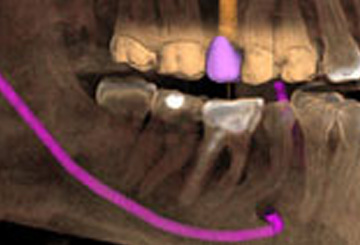
3-D Guided Implants
When it comes to dental implants, accuracy is everything. With the latest 3-D imaging, implants at Westlake Dental are taken to a new level of precision. Dr. Constantinou has traveled the country to study at some of the foremost implant facilities in the world in order to understand the wave of innovation and advancement in the field. Drs. Reichard and McClendon are also trained in the latest technology and methods..
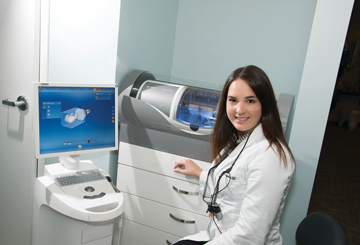
Same-Day Crowns
With Westlake Dental Associates’ state-of-the-art CEREC machine, patients can receive beautiful crowns, often during just one appointment, instead of waiting weeks to get their crowns back from the lab. Teeth are quickly restored without any messy impressions, which means a lower cost and better results than with traditional treatment.
