
7 Ways a Misaligned Bite Affects Your Health
When your upper and lower teeth do not meet the way they should, the effects reach far beyond a crooked smile: worn teeth, jaw pain, headaches, gum problems and more. Here is what a bad bite does over time, how to tell if you have one, and how we correct it.
What a misaligned bite actually is
Some degree of misalignment is extremely common. Most of it is mild and harmless. The trouble starts when the bite forces your teeth, jaw muscles and jaw joints to work unevenly, day after day, for years. That constant imbalance is what produces the seven effects below.
At Westlake Dental Associates, a bite check is part of every exam. If we see uneven wear, a jaw that shifts when you close, or sore muscles, we talk through what is causing it and the least invasive way to fix it, right here on Center Ridge Road.
How a bad bite affects your health, from teeth to sleep
These show up gradually. Most patients notice two or three before they connect them to their bite.
Worn, Chipped and Flattened Teeth
When only a few teeth take the full force of every bite, they wear down faster than the rest. Edges chip, chewing surfaces flatten, and enamel thins, which leads to sensitivity and cracks. This wear is permanent, so catching it early matters.
Jaw Pain and TMJ Disorder
An uneven bite makes the jaw muscles and the jaw joints (the TMJs) work harder to bring the teeth together. Over time that strain causes clicking, popping, stiffness and pain in front of the ears, and can progress into a full TMJ disorder.
Headaches and Facial Pain
Overworked jaw muscles do not stay in the jaw. Tension radiates into the temples, the sides of the head and the neck. Many patients with recurring tension headaches, especially in the morning, have a bite or grinding problem underneath.
Tooth Pain When Biting
A tooth that hits first, or hits harder, gets bruised at the root with every bite. The result is a sharp or aching pain when you chew that can mimic a cavity or a cracked tooth. Adjusting how that tooth meets its partner often relieves it quickly. Sudden, severe pain when biting can also mean a cracked tooth, which is an emergency visit.
Gum Recession and Gum Disease
Crowded or tilted teeth are harder to brush and floss, so plaque collects and gums become inflamed. Excess force on a tooth can also push the gum line downward. Both make gum disease and bone loss more likely over the years.
Trouble Chewing, Speaking and Breathing
A bite that does not close properly makes chewing less efficient, can cause lisping or other speech changes, and often goes with mouth breathing. Jaw position can also narrow the airway, which is one reason bite problems and snoring or sleep apnea tend to appear together.
Confidence and Daily Comfort
Living with a sore jaw, worn teeth or a smile you hide takes a toll. People with noticeable misalignment often avoid photos, laugh less freely or skip social situations. Correcting the bite is as much about comfort and confidence as it is about teeth.
Which kind of bite problem do you have?
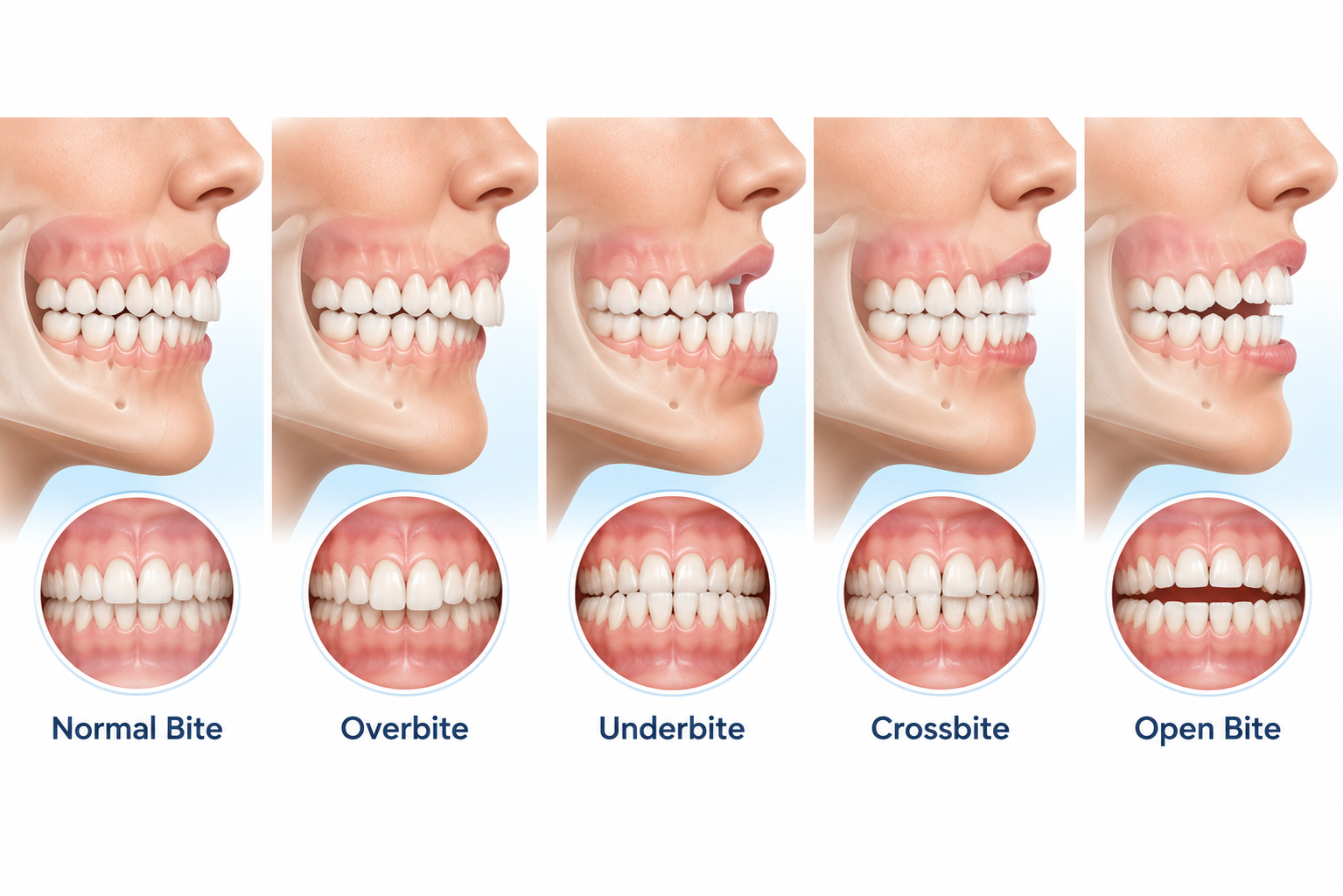
Bite problems are grouped by how the upper and lower teeth relate when you close. Knowing the type helps us choose between aligners, a night guard, a bite adjustment or restorations.
- OverbiteUpper teeth too far over the lowerThe most common type. A deep overbite can wear the lower front teeth and strain the jaw.
- UnderbiteLower teeth in front of the upperUsually from jaw growth. It affects chewing and speech and is the hardest type to correct without orthodontics.
- CrossbiteSome upper teeth sit inside the lowerCauses uneven wear and can shift the jaw to one side when you close.
- Open BiteFront teeth do not touchOften linked to childhood thumb sucking or tongue posture. Makes biting into food difficult.
- CrowdingNot enough room for the teethTeeth overlap and rotate, which traps plaque and creates high spots in the bite.
Can a misaligned bite cause tooth pain or headaches?
Three of the most common questions we hear, answered plainly.
Can an uneven bite cause tooth pain?
Yes. When one tooth meets its partner before the others, it absorbs extra force with every bite. The ligament around the root becomes bruised and inflamed, which feels like a toothache or a cracked tooth, especially when chewing. A small bite adjustment often ends the pain.
Can misaligned teeth cause headaches?
Yes. Jaw muscles that work overtime to close an uneven bite stay tense, and that tension spreads to the temples and the sides of the head. Headaches that are worst in the morning, or that come with a tight jaw, often trace back to the bite or to grinding.
How do I know if my bite is misaligned?
Signs include teeth that do not touch evenly when you close, chewing on one side, a jaw that shifts or clicks, chipped or flat-looking teeth, cheek biting, and sore jaw muscles. A dental exam confirms it with a bite check, photos and X-rays.
The 7 ways a misaligned bite affects your health
A one-view summary of the effects above and the warning signs for each.

Click image to enlarge
Treatment depends on what is causing the misalignment
We always start with the least invasive option that will solve the problem.
Invisalign Clear Aligners
For crowding, spacing and many overbites and crossbites, aligners move the teeth into a bite that meets evenly.
Invisalign →Night Guard or Bite Splint
Cushions teeth from grinding and rests the jaw muscles while the underlying bite issue is addressed.
Night Guards →Bite Adjustment & Restorations
Reshaping a high spot, or rebuilding worn or missing teeth with bonding, crowns or implants so the bite closes evenly again.
Dental Crowns →TMJ Treatment
When the joint itself is inflamed, custom oral appliances and jaw therapy calm the pain while we correct the bite.
TMJ Treatment →Severe jaw-growth problems may need an orthodontist or oral surgeon. We coordinate the referral and handle your care before and after. See all of our dental services.
Misaligned Bite FAQs
A misaligned bite, or malocclusion, means your upper and lower teeth do not fit together correctly when your mouth is closed. It can be caused by crowded or crooked teeth, jaws that do not line up, or missing and worn teeth that let the others shift.
Common signs are teeth that do not touch evenly, chewing on one side, a jaw that clicks or shifts when you close, chipped or flat-looking teeth, cheek biting, sore jaw muscles, frequent headaches and tooth pain when biting. Some people also notice speech changes or mouth breathing.
Yes. A tooth that meets its partner too early absorbs extra force with every bite, which inflames the ligament around its root. That produces an ache or sharp pain when chewing that can feel like a cavity or a crack. Adjusting the high spot usually relieves it.
Yes. Jaw muscles that work harder to close an uneven bite stay tense, and that tension spreads to the temples and sides of the head. Morning headaches or headaches with a tight jaw are often bite or grinding related.
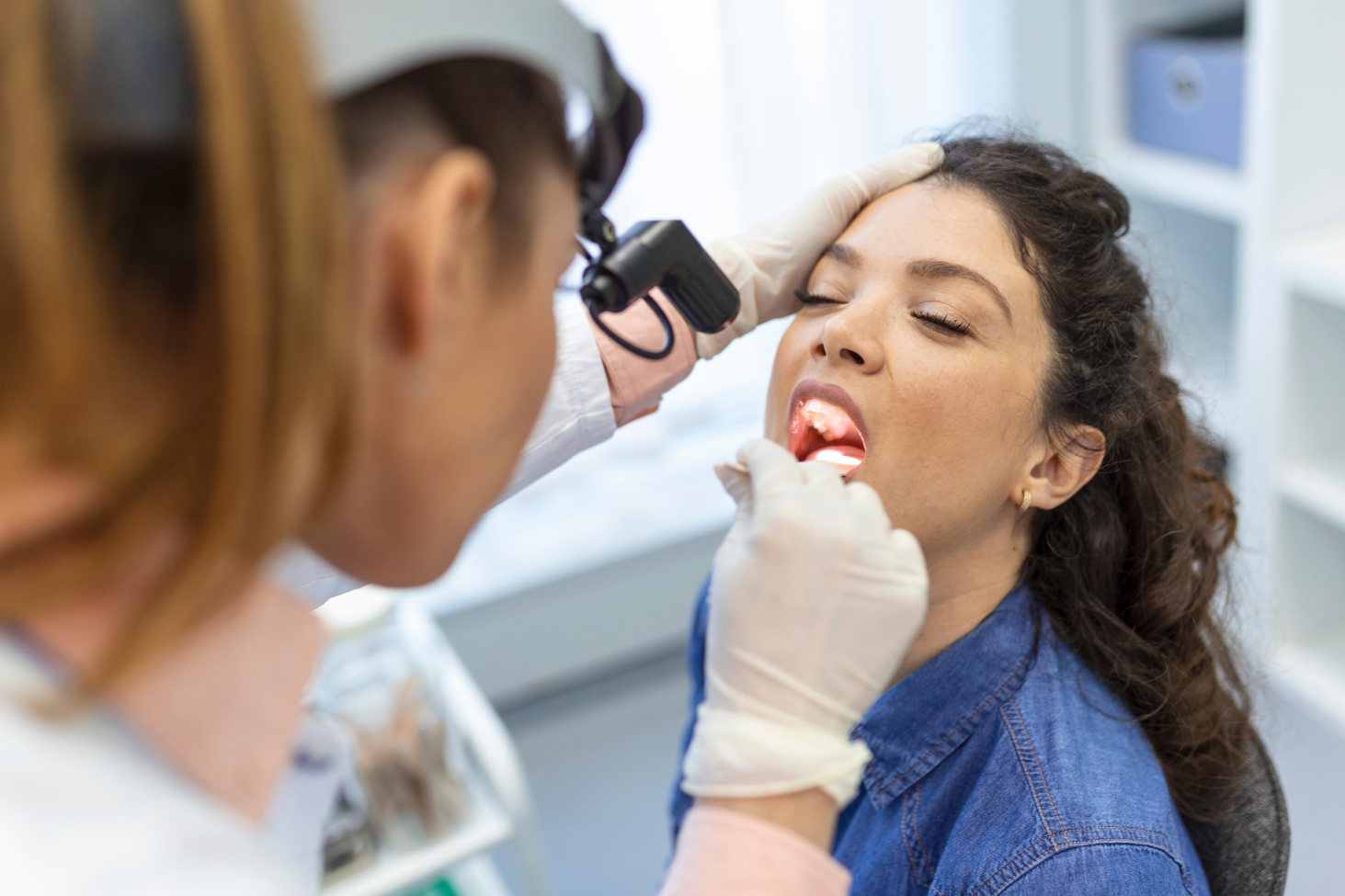
At a dental exam, we check how your teeth meet, look for wear patterns and jaw tenderness, and take photos and X-rays. A digital scan of your teeth may be used to study the bite in detail. Severe jaw-growth issues are referred to an orthodontist.
Often, yes. Mild cases may only need a bite adjustment, which reshapes high spots so the teeth meet evenly. Night guards protect teeth and rest the jaw. Worn or missing teeth can be rebuilt with bonding, crowns or implants. For crooked or crowded teeth, Invisalign clear aligners correct the bite without metal braces.
It can. Teeth continue to shift throughout life, wear accumulates, and missing teeth let neighbors drift. Grinding speeds all of this up. Treating a problem bite earlier means less wear to repair later.
Coverage depends on the treatment and your plan. Restorative work like crowns is often partly covered, while orthodontic treatment such as Invisalign varies widely. Our team reviews your benefits before treatment, and our financial options page explains payment plans.
Find out what your bite is doing to your teeth
A bite evaluation at our Westlake office takes one visit and tells you whether your headaches, jaw pain or worn teeth trace back to how your teeth meet. Call or book online today.

Comprehensive Family Care
The tradition of family is central to every visit at Westlake Dental. Our goal is to treat patients with the same care and compassion we would our own families. As general dentists who do not believe in one-size-fits-all care, Drs. Constantinou, Reichard, and McClendon consult with each patient, from children through adults, to provide comprehensive treatment solutions unique to each person.
3-D Guided Implants
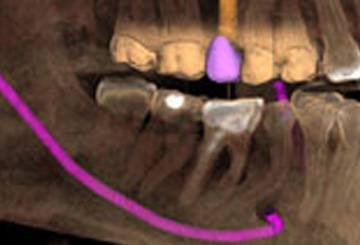
When it comes to dental implants, accuracy is everything. With the latest 3-D imaging, implants at Westlake Dental are taken to a new level of precision. Dr. Constantinou has traveled the country to study at some of the foremost implant facilities in the world in order to understand the wave of innovation and advancement in the field. Drs. Reichard and McClendon are also trained in the latest technology and methods..
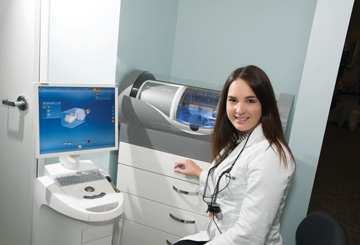
Same-Day Crowns
With Westlake Dental Associates’ state-of-the-art CEREC machine, patients can receive beautiful crowns, often during just one appointment, instead of waiting weeks to get their crowns back from the lab. Teeth are quickly restored without any messy impressions, which means a lower cost and better results than with traditional treatment.
