
Dental Bridges — Fixed, Natural-Looking Replacements for Missing Teeth
A dental bridge is a fixed, non-removable prosthetic device used to replace one or more missing teeth — anchoring an artificial tooth, called a pontic, to adjacent natural teeth or implants. Bridges restore your ability to chew and speak, keep surrounding teeth from shifting, and maintain the natural shape of your face.
This page walks through the four main types of dental bridges, how they're placed, who they work best for, and how they compare to alternatives like implants and dentures — so you can choose the right tooth replacement for your situation.

What a dental bridge actually does for your smile
Bridges do more than fill a visible gap — they protect the integrity of your bite, your remaining teeth, and the long-term shape of your face. Here's the full picture of what bridges restore.
- Restores Function Brings back your ability to chew comfortably and speak clearly — without slurring or working around missing teeth.
- Prevents Shifting When a tooth is missing, neighboring teeth drift into the gap over time. A bridge stops that shift before it causes alignment problems.
- Maintains Face Shape Missing teeth lead to a sunken-in look around the cheeks and jaw. Bridges support facial structure and prevent that collapse.
- Natural Aesthetics Custom-made to match the color and shape of your surrounding teeth — most people won't be able to tell which tooth is the bridge.
Four bridge options — and how to know which fits your situation
The right type of bridge depends on where the missing tooth is, the health of your surrounding teeth, and how much support is available. Here's how the four main options compare.
Traditional Bridge
PORCELAIN OR CERAMICThe standard option. An artificial tooth (pontic) is held in place by crowns cemented onto the natural teeth on both sides of the gap. Strong, reliable, and used for most missing-tooth cases.
Cantilever Bridge
LIMITED USE CASESSimilar to a traditional bridge, but anchored to a crown on only ONE side of the gap. Used in specific situations where only one natural tooth is available next to the missing tooth.
Maryland Bridge
RESIN-BONDEDA less invasive option that bonds a metal or porcelain framework to the BACK of adjacent teeth — no crowns required. Often used for front teeth where preserving enamel matters most.
Implant-Supported Bridge
LONGEST LASTINGAnchored to dental implants in the jawbone instead of natural teeth. Provides exceptional stability for multiple missing teeth — without putting load on surrounding teeth.

When implants make your bridge even stronger
For patients missing multiple teeth in a row — or those wanting maximum durability without involving adjacent natural teeth — implant-supported bridges combine the strength of dental implants with the seamless coverage of a bridge. The result is a restoration that feels and functions like natural teeth.
How a traditional dental bridge is placed
A tooth-supported bridge typically takes two visits over a few weeks. Here's what to expect from your initial appointment to the day your final bridge is cemented in place.
- Consultation and evaluation We examine the gap and surrounding teeth, take X-rays, and confirm a bridge is the right option for your situation. We'll discuss which type of bridge best fits the location, your bite, and your goals.
- Abutment tooth preparation The teeth on either side of the gap (the abutments) are gently reshaped to make room for the crowns that will anchor the bridge. Impressions or digital scans are taken to design the custom bridge.
- Temporary bridge While your permanent bridge is being crafted in a dental lab, a temporary bridge protects the prepared teeth and lets you eat and speak comfortably during the wait.
- Final placement and bite check At your second visit, we check the fit, color, and bite of the permanent bridge — making any needed adjustments — and cement it securely in place. You leave with a fully restored smile.

Is a bridge really the right choice for you?
Bridges are reliable and proven, but they aren't always the best option. Depending on how many teeth are missing and the condition of your surrounding teeth, an implant or denture might serve you better. Here's how they compare.
When an implant is better
A standalone dental implant replaces both the missing tooth AND its root — preventing jawbone loss and avoiding the need to reshape healthy adjacent teeth. Implants cost more upfront but often last a lifetime.
Dental Implants →When a denture makes sense
If you're missing several teeth in different parts of your mouth — or an entire arch — a partial or full denture may be a better fit than multiple bridges. Dentures are removable and replace many teeth at once.
Dentures →When the tooth can still be saved
If the tooth in question hasn't been lost yet — just badly damaged — a dental crown can often save it. Crowns preserve the natural root, and avoiding extraction is almost always the better long-term outcome.
Dental Crowns →
Are you a good candidate for a dental bridge?
Bridges work well for most patients with one or more missing teeth, but the right candidate has healthy adjacent teeth, strong gums, and good daily oral hygiene. Here's a quick honest breakdown.
A bridge may be right if
- You're missing one or more teeth in a row
- Adjacent teeth are healthy and strong
- Your gums and bite are in good shape
- You maintain consistent oral hygiene
- You want a fixed, non-removable solution
A bridge may not be right if
- Adjacent teeth are weakened or decayed
- You have advanced gum disease
- You're missing several teeth in different areas
- You want to preserve healthy enamel (consider implants)
- You have insufficient bone for implant-supported bridges
If you grind your teeth, our bruxism treatment team can help — grinding puts significant stress on bridge restorations and can shorten their lifespan.
Dental Bridge FAQs
With proper care, dental bridges typically last 10 years or more — and many last 15+. Longevity depends on the type of bridge, the health of the supporting teeth, your bite, and your daily oral hygiene. Regular professional cleanings are essential to protect both the bridge and the teeth holding it in place.
A bridge isn't always the right call. Common reasons we may recommend something else include weak or decayed adjacent teeth, advanced gum disease, multiple missing teeth in different areas of the mouth, or cases where preserving healthy enamel is a priority. In many of those situations, a dental implant or partial denture is a better long-term solution.
The procedure itself is done under local anesthesia, so you won't feel pain during preparation or placement. Some patients have mild sensitivity or soreness in the days afterward — especially around the prepared teeth — which typically fades quickly. If you have dental anxiety, let us know and we'll take extra time to keep you comfortable.
It depends on your situation. For single missing teeth, dental implants are often considered the gold standard — they preserve adjacent teeth and prevent jawbone loss. For multiple missing teeth across different areas, partial dentures may make more sense. A bridge wins when adjacent teeth need crowns anyway, when budget matters, or when you want a faster, non-surgical option.
Yes — and that's why proper cleaning matters. The teeth supporting a bridge can still develop decay along the edges where the crown meets the natural tooth. Brushing twice daily, flossing under the bridge with a floss threader or water flosser, and keeping up with cleanings prevents this. With good care, the underlying teeth stay healthy for many years.
A traditional bridge typically requires one healthy tooth on each side of the gap to act as anchors. A cantilever bridge can work with just one anchor tooth in certain situations. An implant-supported bridge doesn't rely on natural teeth at all — it's anchored to implants placed in the jawbone. We'll evaluate which setup fits your specific case.
Most patients adjust within a few days. There may be a brief period where speaking certain sounds feels different, or where you're learning to chew with a new surface — but the bridge is designed to feel like your natural teeth, and within a week or two most people forget it's there.
Brush twice daily with a soft-bristled toothbrush, and pay special attention to the gumline around the bridge. Floss daily using a floss threader, super floss, or a water flosser to clean UNDER the pontic — that area can't be reached with regular floss. Avoid biting hard objects (ice, pens, nails) and schedule regular professional cleanings to catch any issues early.
Modern dental bridges are typically made from porcelain, ceramic, or porcelain fused to metal — sometimes with gold alloy underneath for added strength. The visible portion is shade-matched to your natural teeth for a seamless look. We'll recommend the material that best balances appearance, strength, and longevity for your specific case.
Yes. When a bridge eventually wears out, becomes loose, or the underlying teeth change, we can replace it. Replacement is often simpler than the original procedure — and in some cases, we can update the bridge to a stronger material or different design based on how your mouth has changed over time.
Ready to fill the gap — for good?
Book a consultation and we'll evaluate the missing-tooth area, talk through your options — bridge, implant, denture, or something else — and recommend the right path for your bite, your long-term health, and your goals.

Comprehensive Family Care
The tradition of family is central to every visit at Westlake Dental. Our goal is to treat patients with the same care and compassion we would our own families. As general dentists who do not believe in one-size-fits-all care, Drs. Constantinou, Reichard, and McClendon consult with each patient, from children through adults, to provide comprehensive treatment solutions unique to each person.
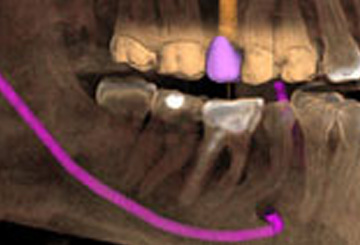
3-D Guided Implants
When it comes to dental implants, accuracy is everything. With the latest 3-D imaging, implants at Westlake Dental are taken to a new level of precision. Dr. Constantinou has traveled the country to study at some of the foremost implant facilities in the world in order to understand the wave of innovation and advancement in the field. Drs. Reichard and McClendon are also trained in the latest technology and methods..
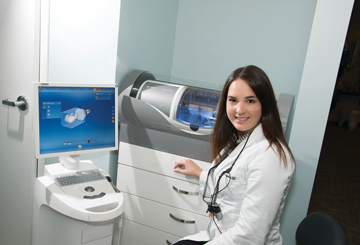
Same-Day Crowns
With Westlake Dental Associates’ state-of-the-art CEREC machine, patients can receive beautiful crowns, often during just one appointment, instead of waiting weeks to get their crowns back from the lab. Teeth are quickly restored without any messy impressions, which means a lower cost and better results than with traditional treatment.
