

Dentures — Restoring Your Smile, Your Chew, and Your Confidence
Dentures are custom-made removable appliances that replace missing teeth and the surrounding tissue — restoring your ability to eat, speak, and smile with confidence. Crafted from durable materials like acrylic, resin, and porcelain, modern dentures are designed to look and feel as natural as possible.
Whether you're missing a few teeth or an entire arch, this page walks through the different types of dentures, how they're made, and how implant-supported options compare to traditional ones — so you can choose the right path for your smile.

How dentures restore more than just your smile
Missing teeth affect more than your appearance — they impact how you eat, how you speak, and how you feel about yourself in social situations. Dentures address all of it in one solution.
- Improved Chewing Eat the foods you love again — dentures restore chewing function so meals feel like meals, not a chore.
- Clearer Speech Missing teeth can affect how you pronounce certain sounds. Properly fitted dentures help bring back clear, confident speech.
- Facial Structure Support Teeth support the shape of your face. Dentures help prevent the sunken-in look that comes with tooth loss.
- Restored Confidence A complete smile changes how you carry yourself — in photos, in conversations, and in everyday moments.
Choosing the right type of denture for your situation
Dentures come in several configurations, depending on how many teeth you're missing and how much stability you want. Here's a breakdown of the main options we offer.
Implant-Supported Dentures
LONGEST LASTINGAnchored to dental implants placed in the jawbone for unmatched stability. They snap securely into place — no adhesive needed — and feel closer to natural teeth than any traditional denture.
Full (Complete) Dentures
7–10 YEAR LIFESPANReplace an entire arch of missing teeth — upper, lower, or both. Rest on the gums and rely on suction (and sometimes adhesive) to stay in place.
Partial Dentures
7–10 YEAR LIFESPANFor patients missing several teeth but still keeping some natural ones. Special clasps hook around remaining teeth for added stability — and help preserve them, too.
Immediate Dentures
TEMPORARY OR LONG-TERMPlaced right after tooth extractions, so you never have to go without teeth during healing. Some patients keep them as their final dentures; others transition to a long-term set.

The implant option — stability you can feel
If you've worn traditional dentures and dealt with slipping, soreness, or constant adjustments, implant-supported dentures are a different experience entirely. They anchor to small titanium posts in your jawbone, giving you the look of dentures with the stability of natural teeth.
How your custom dentures are designed and fit
Creating a denture that looks natural and fits comfortably takes time — typically several visits over a few weeks. Here's what to expect from your first consultation to your final fitting.
- Consultation and evaluation We examine your mouth, take X-rays to assess jawbone health, and discuss your options. Together we choose the denture type that fits your needs, lifestyle, and goals.
- Impressions and measurements Precise impressions or 3D digital scans capture your gums and any remaining teeth. These create the foundation for a denture that fits the unique shape of your mouth.
- Custom fabrication A dental lab crafts your denture from durable materials, building it on a wax registration model first to confirm tooth placement, then finishing with the final base, teeth, and polish.
- Fitting and adjustments You'll come in for a fitting where we check the fit, comfort, and bite. Several follow-up visits over the first few weeks may be needed as your gums adjust — that's normal and expected.

Is a denture really the right choice?
Dentures aren't the only way to replace missing teeth. Depending on how many you're missing and what matters most to you — comfort, longevity, or stability — another option might fit better. Here's how they compare.
When implants might be better
Standalone dental implants replace individual tooth roots and the crowns on top — they don't come out, they prevent bone loss, and they can last a lifetime. They cost more upfront, but for the right candidate, they're the closest thing to natural teeth.
Dental Implants →When a crown is the answer
If you still have a damaged tooth that can be saved — even if it's badly broken — a dental crown may be the better path. Crowns preserve your natural tooth root and don't require extraction.
Dental Crowns →When extractions come first
If any remaining teeth are too damaged to save, tooth extraction may come before your dentures are placed. Immediate dentures can fill the gap right after surgery, so you're never without a smile.
Tooth Extractions →
Are you a good candidate for dentures?
Dentures work well for most adults missing some or all of their teeth. But the right type depends on your jawbone health, your remaining teeth, and your daily lifestyle. Here's a quick breakdown.
Dentures may be right if
- You're missing multiple or all teeth
- Your gums and remaining teeth are healthy
- You have adequate jawbone for support
- You're committed to daily denture care
- You want a non-surgical solution
Dentures may not be right if
- You have severe jawbone loss without grafting
- You have untreated gum disease
- Your remaining teeth can still be saved
- You want a fixed, non-removable solution
- You have a strong gag reflex (palate-dependent)
If you grind your teeth at night, our bruxism treatment team can help protect your dentures from wear — grinding can shorten a denture's lifespan significantly.
Denture FAQs
The average lifespan of a denture is 7 to 10 years. They'll typically need a reline every 1 to 2 years to maintain a comfortable fit as your gums and jawbone naturally change over time. Implant-supported dentures generally last longer because they don't rest on the gums in the same way.
Most people are candidates for dentures, but certain conditions need to be addressed first. Active gum disease, severe jawbone loss (without grafting), or remaining teeth that can be saved may change the treatment plan. A strong gag reflex can also make traditional palate-covering dentures uncomfortable — in those cases, implant-supported or partial options may work better.
Some soreness and discomfort during the first few weeks is normal — your gums need time to adjust to the new appliance, and minor fit adjustments are expected. Most patients find significant relief after a few follow-up visits. If pain is severe or persistent, that's a sign the denture needs adjustment, not something to push through.
No — that's what immediate dentures are for. If you need extractions before your final dentures, we can place immediate dentures the same day as your surgery. You walk out with teeth, give your gums time to heal underneath, and then transition to your permanent set when you're ready.
It varies. Some patients adjust within a few weeks; others take a few months to feel fully comfortable. Speaking and eating with dentures takes practice, and your tongue and cheeks need time to learn the new shape of your mouth. Stick with it — the discomfort of the early weeks is temporary, and the long-term benefit is worth it.
Most patients sleep without their dentures. Taking them out for at least 8 hours daily gives your gums a rest, reduces harmful oral bacteria, and helps preserve your jawbone. We recommend taking them out at night, cleaning them, and soaking them in a denture solution until morning.
Remove your dentures at the end of each day. Brush them with a denture brush and a non-abrasive denture cleaner — never regular toothpaste, which is too rough. Soak them overnight in water or a denture cleaning solution to keep them moist. And don't forget to brush your gums, tongue, and any remaining teeth twice a day to keep your mouth healthy.
Implant-supported and implant-retained dentures are the most significant recent advance. They combine the affordability and design of traditional dentures with the stability of dental implants, eliminating the slipping and soreness that come with conventional dentures. 3D digital scanning is also becoming standard — replacing messy impression molds with precise digital scans.
It depends on your goals, your jawbone health, and how many teeth you're missing. Implants are more permanent and feel more natural, but they involve surgery and a longer treatment timeline. Dentures are a faster, non-surgical solution. Many patients land in the middle with implant-supported dentures — the look of dentures, the stability of implants.
Schedule a visit if your dentures feel loose, hurt or pinch your gums, click when you speak, show signs of damage or discoloration, or are more than 10 years old. Don't try to adjust them yourself — over-the-counter glues and DIY relines can damage the denture and your gums.
Ready to restore your smile?
Book a denture consultation and we'll walk you through every option — traditional, partial, immediate, or implant-supported — and recommend the right fit for your goals, your timeline, and your comfort.

Comprehensive Family Care
The tradition of family is central to every visit at Westlake Dental. Our goal is to treat patients with the same care and compassion we would our own families. As general dentists who do not believe in one-size-fits-all care, Drs. Constantinou, Reichard, and McClendon consult with each patient, from children through adults, to provide comprehensive treatment solutions unique to each person.
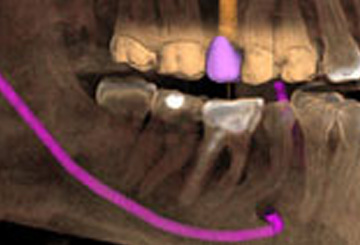
3-D Guided Implants
When it comes to dental implants, accuracy is everything. With the latest 3-D imaging, implants at Westlake Dental are taken to a new level of precision. Dr. Constantinou has traveled the country to study at some of the foremost implant facilities in the world in order to understand the wave of innovation and advancement in the field. Drs. Reichard and McClendon are also trained in the latest technology and methods..
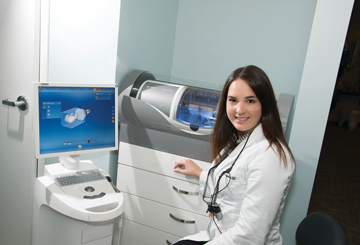
Same-Day Crowns
With Westlake Dental Associates’ state-of-the-art CEREC machine, patients can receive beautiful crowns, often during just one appointment, instead of waiting weeks to get their crowns back from the lab. Teeth are quickly restored without any messy impressions, which means a lower cost and better results than with traditional treatment.
