

Periodontal Treatment — Gum Disease Care and Prevention in Westlake, OH
Gum disease is the leading cause of adult tooth loss in the United States — and it often progresses silently, without obvious pain, until significant damage has already occurred. At Westlake Dental Associates, we detect gum disease early through precise pocket-depth measurements and digital imaging, then treat it aggressively with scaling, root planing, and targeted therapies designed to halt the infection and restore gum health.
Whether you've been told you need a deep cleaning, you've noticed your gums bleeding when you brush, or you're concerned about receding gumlines, this page covers the warning signs, the treatment options, and what to expect from your first periodontal evaluation.

How to recognize gum disease before it causes permanent damage
Gum disease progresses through stages — from reversible gingivitis to advanced periodontitis with bone loss. The earlier you catch it, the simpler and less invasive the treatment. These are the signs that something is wrong.
- Bleeding Gums Gums that bleed when you brush, floss, or eat hard foods. Healthy gums should never bleed — this is the earliest and most common warning sign of active infection.
- Swollen or Red Gums Healthy gums are firm and pale pink. Gums that appear puffy, inflamed, dark red, or tender to the touch indicate a bacterial infection that needs professional attention.
- Receding Gumline Gums pulling away from the teeth, making teeth appear longer than they used to. This exposes sensitive root surfaces to decay and temperature sensitivity.
- Loose Teeth or Shifting Bite Teeth that feel mobile when pressed, or a noticeable change in how your bite fits together. This signals advanced bone loss beneath the gumline — the most serious stage.
How gum disease is treated — from deep cleaning to surgical repair
The right treatment depends entirely on the stage and severity of the disease. Early gingivitis can be reversed with a professional cleaning. Advanced periodontitis may require surgery to save teeth. Here's how the treatment tiers work.
Scaling & Root Planing
DEEP CLEANINGThe primary treatment for mild to moderate periodontitis. Tartar and bacteria are meticulously removed from below the gumline (scaling), and the tooth root surfaces are smoothed (planing) so gums can heal and reattach firmly to the teeth.
Professional Cleaning
ROUTINE MAINTENANCEFor early-stage gingivitis, a thorough professional cleaning combined with improved daily brushing and flossing can fully reverse the condition before it progresses to periodontitis. Regular cleanings prevent recurrence.
Antibiotic & Laser Therapy
ADJUNCT TREATMENTSTopical or oral antibiotics control persistent bacterial infections. Dental lasers can remove inflamed tissue and reduce bacteria inside deep pockets — often with less discomfort and faster healing than traditional surgery.
Periodontal Surgery
BONE & TISSUE REPAIRFor advanced periodontitis, surgical options include pocket reduction (flap surgery), bone grafting to rebuild lost jawbone, soft tissue grafts for receded gums, and guided tissue regeneration to stimulate natural bone regrowth.

Why gum disease affects your whole body — not just your teeth
Gum disease isn't an isolated mouth problem. It's a chronic bacterial infection, and because your gums are highly vascular, those bacteria can enter your bloodstream and trigger inflammation throughout your body. Clinical research consistently links untreated periodontal disease to cardiovascular disease, diabetes complications, and pregnancy risks — making treatment a matter of overall health, not just dental health.
What to expect from evaluation through ongoing maintenance
Treating gum disease is not a one-visit fix — it requires diagnosis, treatment, healing time, and a long-term maintenance schedule to keep the infection from returning. Here's the full process.
- Comprehensive periodontal evaluation We measure the depth of the pockets around every tooth using a periodontal probe, take X-rays to assess bone levels, and check for bleeding, recession, and tooth mobility. Pockets deeper than 3mm indicate active disease.
- Scaling and root planing (deep cleaning) Under local anesthesia, we remove tartar and bacteria from below the gumline and smooth the root surfaces. Treatment is typically split into two visits — one side of the mouth at a time — to ensure thorough, comfortable care.
- Healing and reassessment Your gums need four to six weeks to heal after deep cleaning. We bring you back to remeasure pocket depths, check tissue response, and determine if non-surgical therapy was sufficient or if further treatment is needed.
- Periodontal maintenance schedule Once the infection is controlled, you'll transition to a periodontal maintenance schedule — typically every three to four months instead of the standard six. These visits prevent bacterial recolonization and catch any recurrence early.


When to schedule a periodontal evaluation
Not every case of bleeding gums requires deep cleaning — but ignoring the signs can lead to irreversible bone and tooth loss. Here's a quick guide to help you decide when it's time to come in.
Schedule an evaluation if
- Your gums bleed regularly when brushing or flossing
- You notice persistent bad breath that won't go away
- Your gums are pulling back from your teeth
- Any teeth feel loose or are shifting position
- You have diabetes, heart disease, or are pregnant
Routine cleanings may suffice if
- Bleeding only happens occasionally and resolves quickly
- Your gums are firm, pale pink, and pain-free
- Your dentist confirms pocket depths under 3mm
- You have no family history of early tooth loss
- Your last dental X-rays show no bone loss
If you grind your teeth at night, the added force can accelerate bone loss around weakened gums. Our bruxism treatment team can help protect your teeth and gums from grinding damage.
Periodontal Treatment FAQs
A regular cleaning focuses on the visible surfaces of your teeth above the gumline — it's a preventive measure for healthy mouths. A deep cleaning (scaling and root planing) is a medical treatment for active gum disease. It goes below the gumline to remove hardened tartar and bacteria from the tooth roots that regular brushing and flossing cannot reach.
If caught in the early stage (gingivitis), gum disease is fully reversible with a professional cleaning and improved daily oral hygiene. Mild to moderate periodontitis can often be successfully managed with scaling and root planing combined with antibiotics — no surgery required. Surgery becomes necessary only when deep pockets and significant bone loss don't respond to non-surgical therapy.
Because deep cleaning involves working beneath the gumline, we use local anesthesia to numb the treatment area completely — making the procedure virtually painless during the appointment. You may experience some soreness and tooth sensitivity for a few days afterward, which typically resolves within a week. We can recommend a desensitizing toothpaste to help during the healing period.
Untreated periodontal disease progressively destroys the gums, ligaments, and jawbone that hold your teeth in place. Teeth become loose, shift position, and eventually fall out or require extraction. Beyond your mouth, the chronic bacterial infection is linked to increased risk of cardiovascular disease, uncontrolled diabetes, and pregnancy complications. Early treatment prevents all of this.
Gingivitis involves inflammation and bleeding of the gums without bone damage — it's reversible. Periodontitis occurs when the infection spreads below the gumline, causing gums to pull away from the teeth, forming pockets, and destroying supporting bone. A dentist must measure pocket depths and take X-rays to confirm whether bone loss has occurred. You can't diagnose this on your own.
In many cases, yes. Bone grafting procedures place new bone material into the areas destroyed by periodontitis, and guided tissue regeneration uses specialized membranes to encourage your body to naturally regrow lost bone and supporting ligaments. These surgical options are typically recommended after non-surgical treatment has stabilized the infection.
Most patients find that soreness and tenderness subside within five to seven days. Tooth sensitivity to hot and cold may last a few weeks. Full gum reattachment and pocket-depth improvement takes four to six weeks, which is when we bring you back for a reassessment to measure your progress and determine if additional treatment is needed.
A periodontist is a specialist who completes three additional years of training after dental school, focusing exclusively on the prevention, diagnosis, and treatment of gum disease and the placement of dental implants. While general dentists can handle early-stage gum disease and routine deep cleanings, a periodontist manages complex surgical cases, bone grafting, and tissue regeneration procedures.
It depends on how much bone support remains. If caught in time, a periodontist can perform deep cleaning, bone grafting, or splinting (attaching the loose tooth to adjacent stable teeth) to allow the supporting tissues to heal. However, if bone loss is too severe, extraction may be the only option — followed by replacement with a dental implant or bridge.
After active treatment, most patients transition to a periodontal maintenance schedule of every three to four months — more frequent than the standard six-month cleaning. This prevents bacteria from recolonizing the deeper pocket areas and catches any recurrence before it causes further damage. Over time, the interval may extend as your condition stabilizes.
Don't wait for gum disease to take your teeth
Book a periodontal evaluation at our Westlake, Ohio office. We'll measure your pocket depths, assess your bone health, and build a treatment plan that stops the infection and preserves your smile for the long term.

Comprehensive Family Care
The tradition of family is central to every visit at Westlake Dental. Our goal is to treat patients with the same care and compassion we would our own families. As general dentists who do not believe in one-size-fits-all care, Drs. Constantinou, Reichard, and McClendon consult with each patient, from children through adults, to provide comprehensive treatment solutions unique to each person.
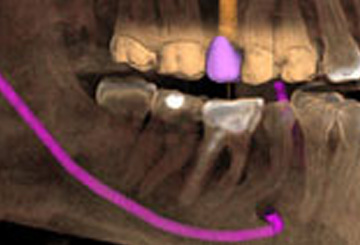
3-D Guided Implants
When it comes to dental implants, accuracy is everything. With the latest 3-D imaging, implants at Westlake Dental are taken to a new level of precision. Dr. Constantinou has traveled the country to study at some of the foremost implant facilities in the world in order to understand the wave of innovation and advancement in the field. Drs. Reichard and McClendon are also trained in the latest technology and methods..
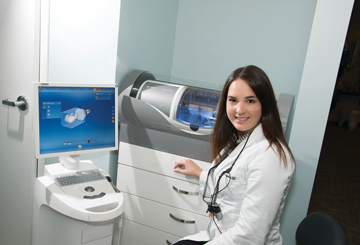
Same-Day Crowns
With Westlake Dental Associates’ state-of-the-art CEREC machine, patients can receive beautiful crowns, often during just one appointment, instead of waiting weeks to get their crowns back from the lab. Teeth are quickly restored without any messy impressions, which means a lower cost and better results than with traditional treatment.
