
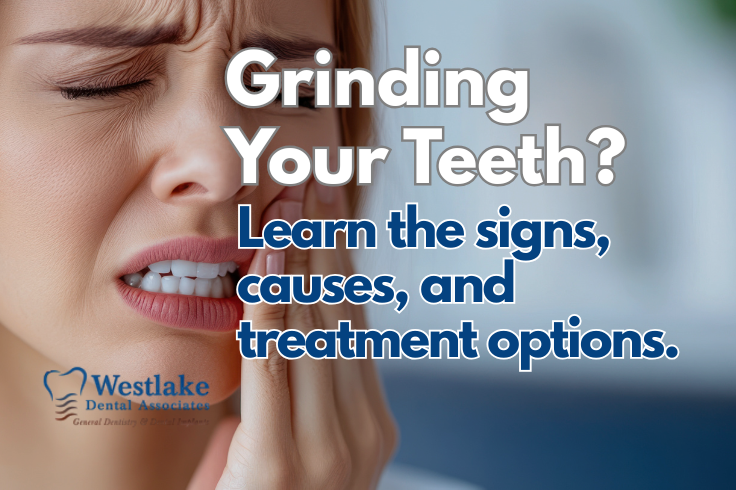
What Is Bruxism?
If you wake up with jaw soreness, headaches, or sensitive teeth, you may be experiencing bruxism — a condition that causes involuntary teeth grinding or clenching. Many people grind their teeth during sleep without realizing it.
Left untreated, bruxism can lead to worn enamel, cracked teeth, jaw pain, and even TMJ issues.
But modern dentistry offers effective solutions.
At Westlake Dental Associates, we help patients identify the signs early and provide personalized treatment to protect their long-term oral health.
What Causes Bruxism?
SBruxism can develop for several reasons, including:
- Stress and anxiety
- Sleep disorders
- Bite misalignment
- Missing or crooked teeth
- Certain medications
Because the causes vary, proper diagnosis is essential before choosing the right treatment.

Why Bruxism Shouldn’t Be Ignored
Here’s what ongoing teeth grinding can lead to:
- Flattened, chipped, or fractured teeth
- Increased tooth sensitivity
- Jaw stiffness or locking
- Chronic headaches
- TMJ disorders
Even mild grinding over time can create significant damage.
That’s why early evaluation matters.
If you suspect you’re grinding your teeth, professional bruxism treatment in Westlake, OH can help prevent long-term complications and protect your smile.
How Is Bruxism Treated?
Treatment depends on severity, but may include:
- Custom-fitted night guards
- Bite adjustments
- Monitoring enamel wear
- TMJ therapy when needed
Custom night guards are often the first line of defense. Unlike store-bought options, professional guards are designed specifically for your bite to provide better comfort and protection.
When Should You See a Dentist for Teeth Grinding?
You should schedule an evaluation if you experience:
- Morning jaw pain
- Frequent tension headaches
- Clicking or popping in your jaw
- Visible tooth wear
- Increased tooth sensitivity
Early treatment can prevent costly restorative work later.
Protect Your Smile Before Damage Occurs
Bruxism may seem harmless at first, but over time it can weaken teeth and strain the jaw joints.
If you’re noticing symptoms of teeth grinding, a professional evaluation can help determine the right next steps.
Addressing bruxism early protects not just your teeth — but your overall comfort and long-term oral health.
Frequently Asked Questions About Bruxism
Bruxism is a condition where a person grinds or clenches their teeth, often during sleep. Over time, it can cause jaw pain, headaches, worn enamel, tooth sensitivity, and even cracked teeth. Many people don’t realize they grind their teeth until symptoms appear.
Bruxism can be caused by stress, anxiety, sleep disorders, bite misalignment, or certain medications. In some cases, it develops without a clear cause. A dental evaluation can help determine contributing factors and the best treatment approach.
Bruxism is commonly treated with a custom night guard that protects the teeth during sleep. In some cases, bite adjustments or TMJ therapy may be recommended. Treatment focuses on preventing damage and relieving jaw tension.
Yes. Long-term teeth grinding can wear down enamel, crack teeth, and lead to restorations such as crowns. Early diagnosis and treatment can prevent serious damage and reduce the risk of long-term complications.
A professionally fitted night guard provides better protection and comfort than over-the-counter options. Custom guards are designed specifically for your bite and help reduce pressure on the teeth and jaw joints during sleep.